Programmable electrical timer
- Pre-commitment
Before sunset, the house is rehearsed
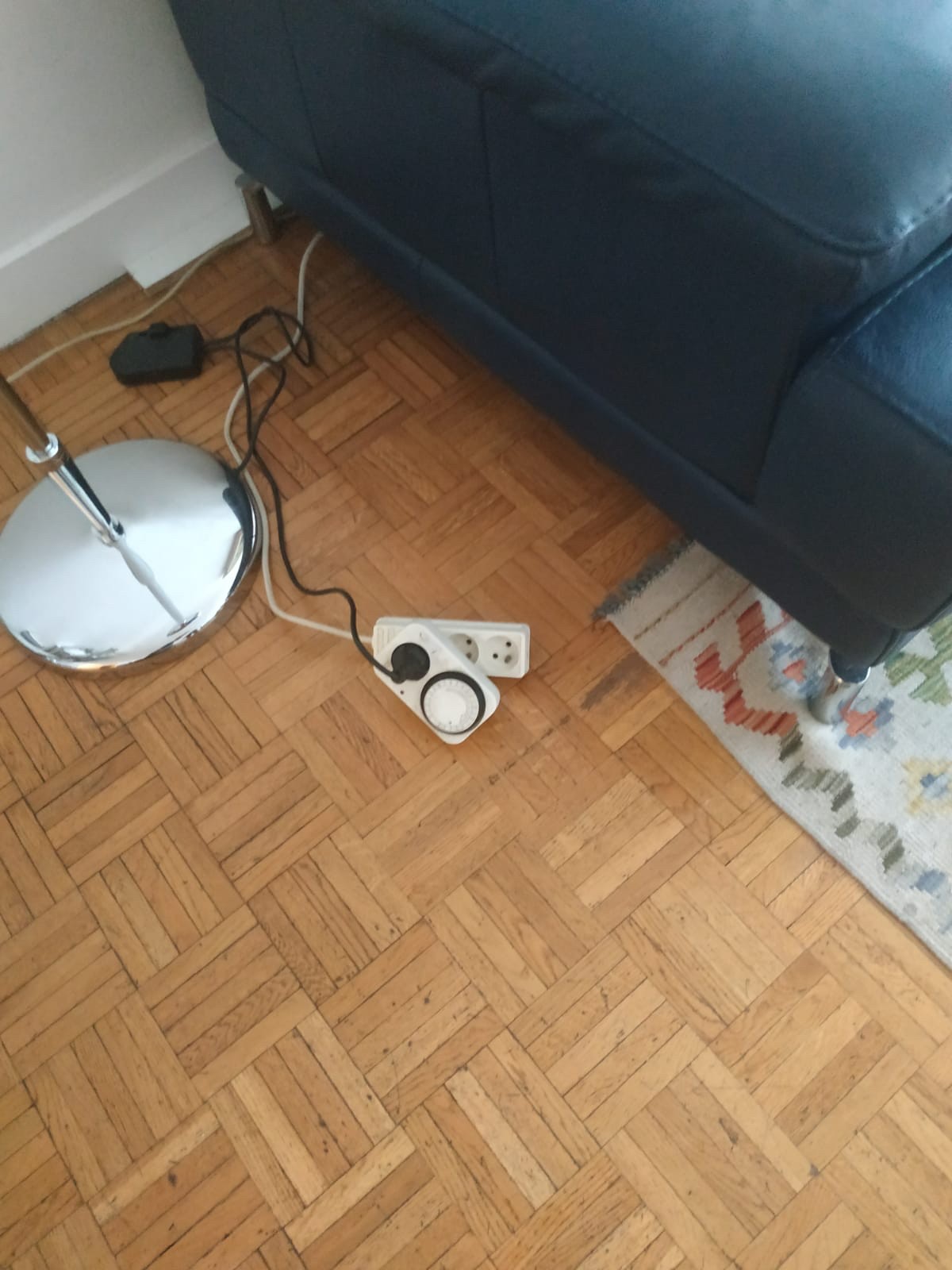
Friday afternoon brings a final round of preparations. Lamps, hot plates and timers are set before Shabbat begins. During one research visit, a member of the household moved repeatedly between the dining room and the bedroom to check the lights. A forgotten setting could leave the bedroom illuminated through the night.
The timer belongs to this moment. Its small dial holds decisions about hours that have not yet arrived: when a lamp should come on, how long a hot plate should remain powered, and when darkness should return to a room.
Preparing the timer means forming a picture of the coming day. When will dinner end? How late might someone read? At what hour will people go to bed? The answers are entered into the device before the household begins living through them.
Twenty-four hours inside the mechanism
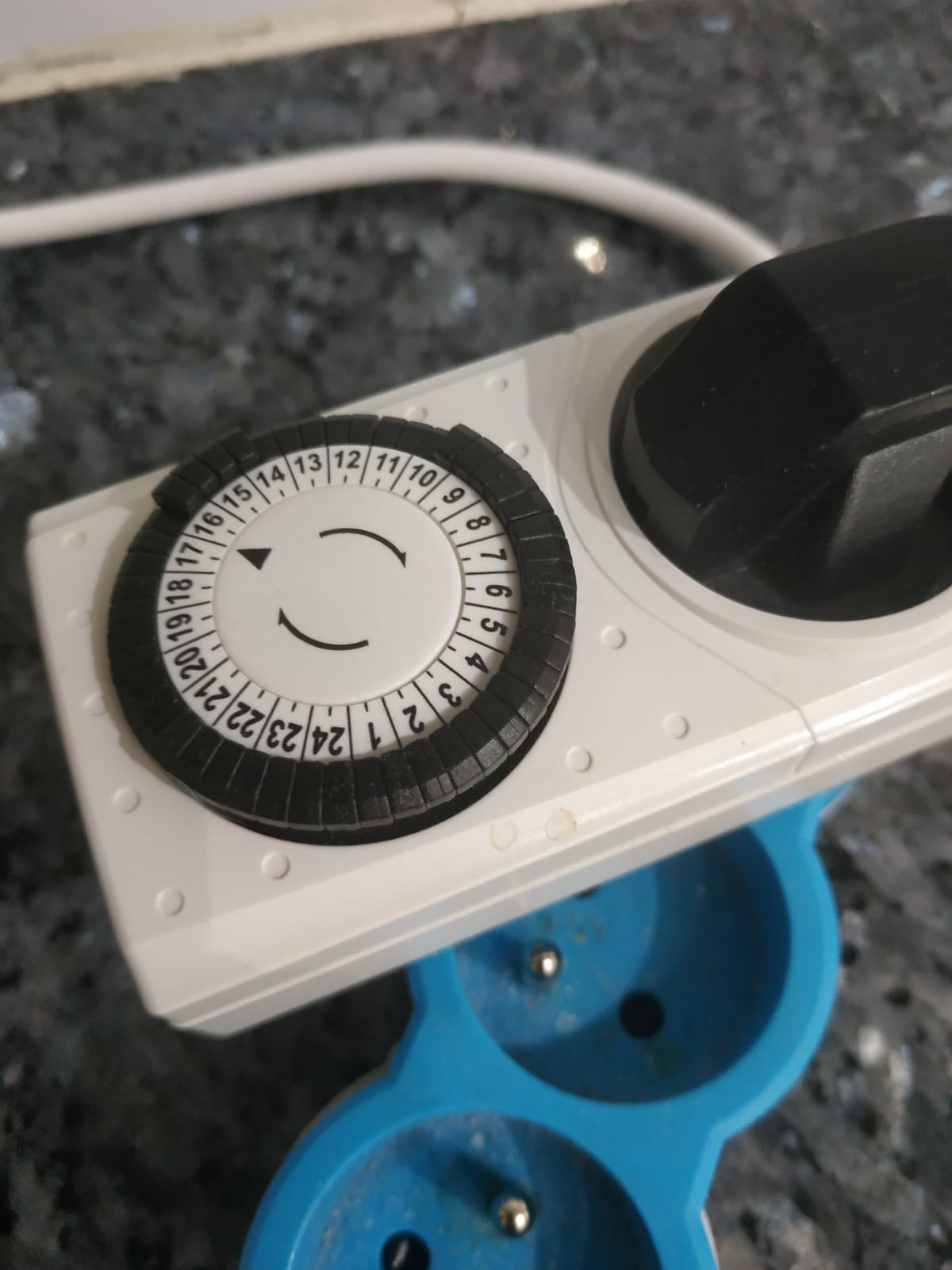
A plug-in timer sits between the wall socket and an appliance. Its circular face compresses a full day into twenty-four numbered hours. Small movable segments around the edge mark the periods during which electricity will be supplied.
Opening the timer reveals how a decision made in advance is carried forward through the mechanism. A clock motor drives a train of gears that slowly rotates the programmed dial. As the selected segments pass the switching point, they alternately engage and release an internal contact, turning the electrical circuit on and off. What appears as a simple schedule on the surface is translated into a sequence of mechanical events that unfolds over the course of the day.
The connected appliance remains in its switched-on position. Its operation depends on the timer’s rotating programme. The movement of a few plastic tabs on Friday is translated into a mechanical sequence: the motor turns, the dial advances, the contact moves, and electricity reaches the lamp.
When the clock is right and the room is wrong
Daily life rarely keeps perfect time. A conversation runs late, a lamp goes dark while someone is still reading, or a bedroom remains illuminated when its occupants want to sleep. Once Shabbat has begun, the usual correction—reaching for the switch—is no longer available.
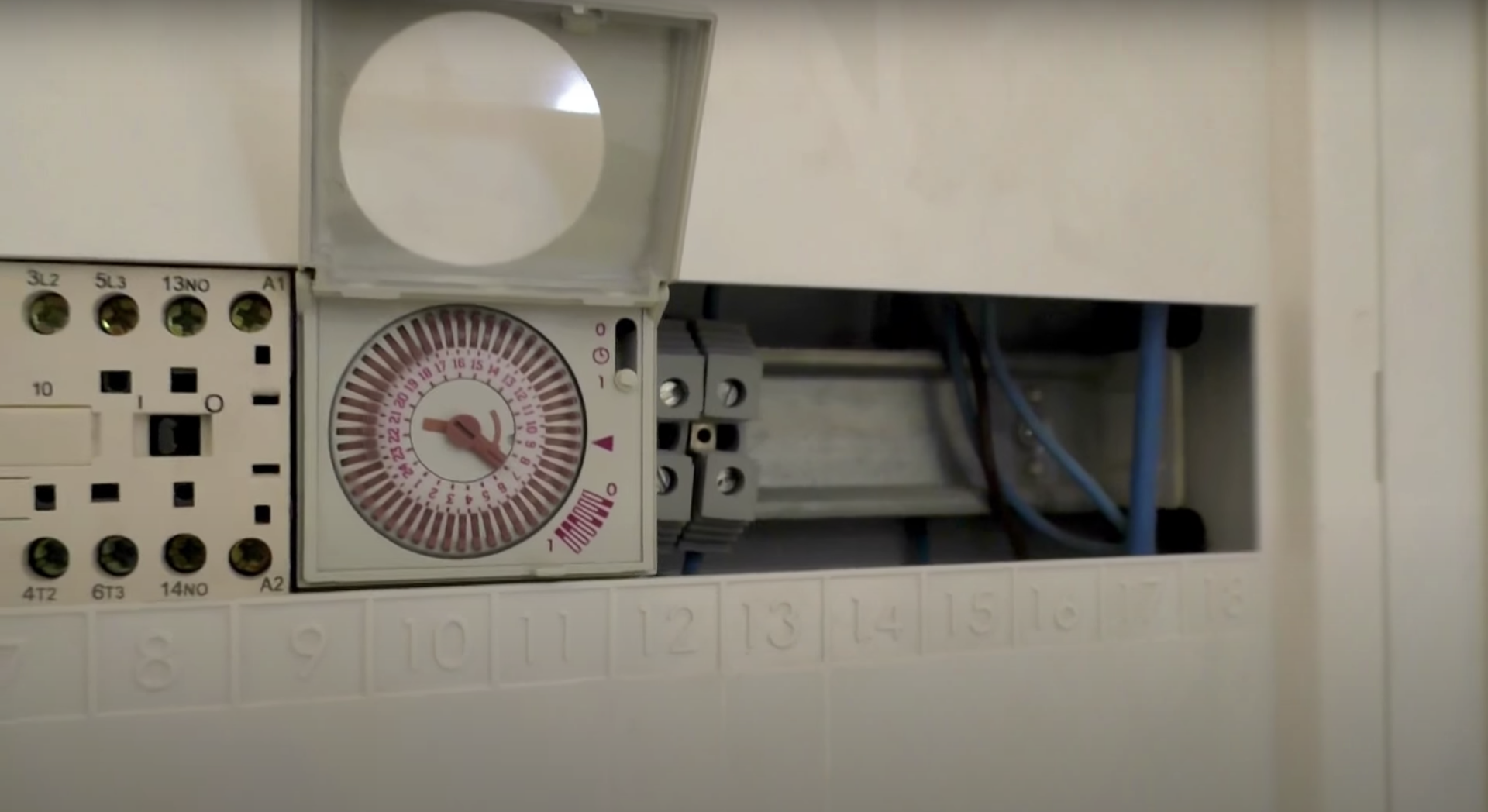
In one household, the air-conditioning schedule became a recurring source of blame: whether the room was too warm or too cold, responsibility returned to whoever had programmed it. In a synagogue, a forgotten seasonal clock change shifted the lighting schedule away from the community’s actual rhythm.
A misplaced tab or an unchanged clock can therefore reshape light, temperature and movement across a room. The programme continues precisely, even when daily life has moved elsewhere.
A switch set in the past
The timer stretches a single interaction across several hours. The hand sets the dial before sunset; the mechanism later translates that instruction into light, heat or darkness.
Reverse engineering reveals this sequence: the dial records the schedule, the clockwork advances it, and the internal contact switches the circuit. Feedback arrives long after the interface was manipulated, when correction may no longer be possible.
Pre-commitment becomes an interaction model. The user imagines a future situation and encodes it into the object, allowing Friday’s gestures to organise Saturday’s domestic life